
Mardi Himal Trek


-

$500
-

6 days
-
moderate
-

2450 m
Introduction to Mardi Himal Trek
The Mardi Himal Trek is a pristine, short-duration journey that takes you through dense rhododendron forests and onto a narrow, high-altitude ridge overlooking the Annapurna Sanctuary. It is widely considered the best “alternative” trek for those who want to escape the crowds of the more famous Annapurna Base Camp while enjoying equally dramatic mountain views.
Serene. Vertical
Who Can Do It?
Suitable for beginners and experienced trekkers alike; requires a moderate level of physical fitness as the trail involves steep stone steps and ridgeline walking.
What to Expect: Quiet forest trails, traditional Gurung villages, dramatic changes in landscape from lush jungle to alpine shrub, and teahouse-style hospitality.
Highlights: Sunrise at Mardi Himal Base Camp, face-to-face views of the “Fishtail” mountain (Machhapuchhre), and the unique experience of walking along a cloud-kissed ridge.

 Overview
 Gallery
 Itinerary
 Includes/Excludes
 FAQs
FAQs Book Now


Itinerary
Day 1: Drive Kathmandu to Pokhara
Scenic landscape, Trishuli River views.
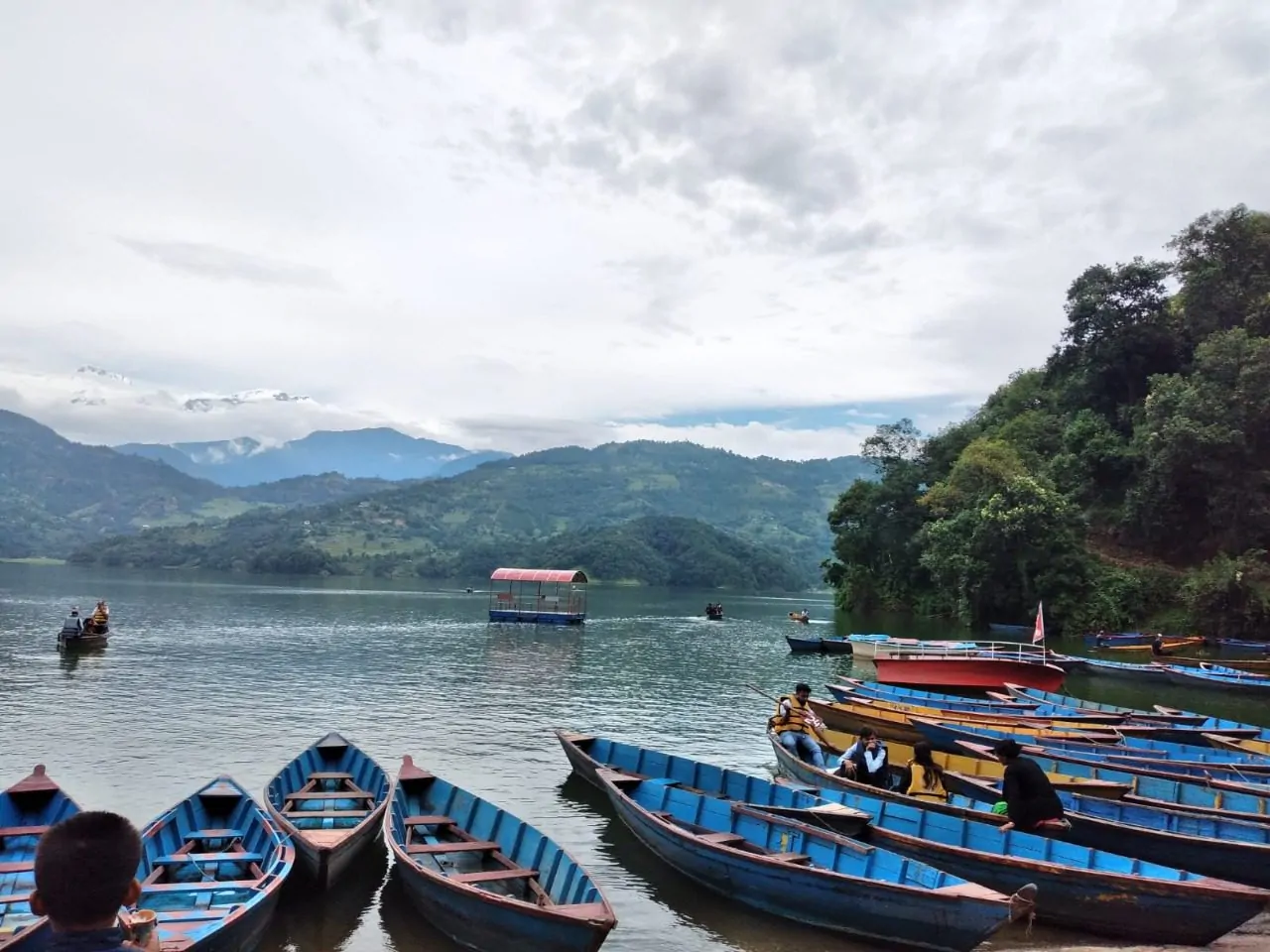
Your journey begins with an early morning drive from the bustling capital, Kathmandu, towards the tranquil lake city of Pokhara. The route follows the winding Prithvi Highway, offering glimpses of terraced fields, rural townships, and the fast-flowing Trishuli River, popular for white-water rafting. After about 6 to 7 hours of travel, you will arrive in Pokhara, the gateway to the Annapurna region. The evening is yours to enjoy a stroll along the shores of Phewa Lake, where the reflection of the Himalayas in the water provides a teaser of the adventure to come. This day is essential for relaxation and final gear checks before hitting the trail the following morning.
 Note
Note
We recommend getting a local Ncell or Nepal Telecom SIM card at the airport. There are also several ATM and money exchange counters in the arrivals area if you need Nepali Rupees (NPR) for immediate expenses.
Pokhara
3 Star hotel
BLD
822m
Drive to Kande and Trek to Forest Camp
Panoramic views from Australian CampAfter a short drive to Kande, the trek officially begins. You will ascend through stone steps to Australian Camp, a famous viewpoint offering a stunning 360-degree panorama of the Annapurna range. From here, the path levels out through Pothana and Pitam Deurali, where you leave the main trekking highway.
The trail enters a quiet, enchanting forest filled with oak, maple, and rhododendron trees. Unlike other treks, the path to Forest Camp (locally known as Kokar) is secluded and intimate, with only the sounds of birds and rustling leaves accompanying your climb.
Forest Camp
Teahouse
BLD
2,520m
Day 3: Trek from Forest Camp to High Camp
The transition to the Alpine Zone
The climb becomes steeper today as you move from the dense forest into the sub-alpine region. As you reach Low Camp, the trees begin to thin, and the iconic “Fishtail” peak appears closer than ever. Continuing further, you reach Badal Danda, a spectacular ridge that often sits above the clouds. The final push to High Camp takes you above the tree line into a landscape of alpine shrubs and grass. High Camp serves as a natural balcony, offering a breathtaking sunset over Annapurna South and Hiunchuli.
High Camp
Teahouse
BLD
3,580m
Day 4: Hike to Mardi Himal Base Camp and back to Badal Danda
Sunrise at the Base CampThis is the most challenging and rewarding day. Starting before dawn, you will navigate a narrow, rocky ridge towards the Mardi Himal Viewpoint or the Base Camp. As the sun rises, the peaks of the Annapurna Sanctuary are set ablaze with golden light. Standing at 4,500m, you are directly beneath the towering south face of Mardi Himal and Machhapuchhre. After absorbing the spiritual silence of the high Himalayas, you will descend back to High Camp for a warm meal before continuing down to Badal Danda for a more comfortable night’s sleep.
Hugu Goth
Tea House
BLD
2016m
Day 5: Trek to Siding Village and Drive to Pokhara
Traditional Gurung culture
Today’s trek is a steady descent through the forest, following a different route to create a loop. You will head toward Siding, a traditional village tucked away from the main trekking paths. This provides a wonderful opportunity to see the authentic lifestyle of the local Gurung and Tamang communities. After a local lunch in the village, a private jeep will pick you up for the drive back to Pokhara. Returning to civilization, you can celebrate your successful summit with a hot shower and a celebratory dinner by the lake.
Pokhara
Hotel
BLD
822m
Day 6: Drive from Pokhara back to Kathmandu
Riverside sceneryAfter a final breakfast with views of the Annapurna range reflecting on Phewa Lake, you will begin your return journey to Kathmandu. The drive follows the same Prithvi Highway, but the perspective often feels entirely different as you head eastward. You will pass through several bustling towns like Damauli, Dumre, and Mugling, where the Marsyangdi and Trishuli rivers converge in a powerful display of nature. If you missed out on trying local snacks on the way in, this is the perfect time to stop at a roadside eatery for some authentic “Dal Bhat” or fresh river fish. As the vehicle climbs the final pass into the Kathmandu Valley, you’ll catch glimpses of the Ganesh Himal and Manaslu peaks in the distance. Arriving back in the capital, you can spend your final evening shopping for souvenirs in Thamel or enjoying a celebratory meal to mark the completion of your Himalayan adventure.
Note
Whether you choose to relax at a lakeside café or shop for souvenirs, it’s the perfect way to celebrate the completion of your trek.
Kathmandu
Luxurious Hotel
BLD
1,400m

Frequently Asked Questions
-
 General Information of Sikles Trek
-
 Guide For Sikles Trek
-
 Required Permits and Documents
-
 Sikles Trek Cost
-
 Booking Process and Cancellation
-
 Accommodation and Food on Sikles Trek
-
 Luggage and Storage in Kathmandu
-
 Payments and Extra Costs
-
 Trek, Safety, and Altitude
-
Preparation and Packing
-
 Cultural and Social Aspects
General Information of Sikles Trek
The Sikles Trek, also known as the Sikles Kapuche Lake Trek, is a beautiful journey in Nepal’s Annapurna region, famous for its breathtaking landscapes, authentic Gurung villages, and the pristine Kapuche Lake, one of the lowest-altitude glacial lakes in the Himalayas.
The trek usually takes about 8 to 10 days and covers around 70 to 80 kilometers, depending on your plan and walking speed.
The best time to do the Sikles Kapuche Lake Trek is in spring (March to May) and autumn (September to November), when the weather is clear and the trails are dry.
The Sikles Kapuche Lake Trek is a moderate trek with both uphill and downhill trails, so you need a basic level of fitness and endurance.
Yes, beginners can definitely do the Sikles Trek. It is a relatively easy to moderate trek in Nepal, with well-marked trails, welcoming village stays, and a comfortable altitude, making it a great choice for first-time trekkers.
The maximum altitude of the Sikles Trek is around 2,540 meters (8,333 feet), reached at Kapuche Lake.
Yes, the Sikles Trek is generally safe to do alone. However, as of 2023, solo trekking without a licensed guide is not allowed on many trekking routes in Nepal. Although the trail is safe and well-used, it is recommended to trek with a licensed guide for safety and to follow current regulations.
Guide For Sikles Trek
While the Sikles Trek is relatively easy and well-marked, doing it without a guide is generally not allowed under current trekking regulations in Nepal. As of recent rules, trekkers are required to hire a licensed guide for most routes.
Even though the trail passes through safe and welcoming villages, trekking with a guide is recommended for better navigation, local insights, and overall safety.
Yes, our guides are multilingual. While English is the primary language used for most tours, we can provide guides who speak a variety of other languages including Spanish, French, German, Chinese, and Hindi based on your specific requirements.
If you have a preferred language for your trek or tour, please let us know in advance so we can ensure the perfect match for your group.
You’ll be in expert hands with our guides, who have spent 5 to 15+ years exploring the heart of Nepal. They know the Sikles Trek like the back of their hand including the best viewpoints and hidden local gems. Your safety is our priority, which is why all our guides are fully trained in first aid and mountain safety, allowing you to simply focus on the incredible scenery.
Required Permits and Documents
No, you don’t need to worry about the paperwork. We handle all necessary permits for the Sikles Trek on your behalf. Once you book your trip, our team takes care of the logistics so you can focus entirely on the journey ahead.
To arrange your permits, we need a copy of your passport and one passport-sized photo. You can conveniently upload these while booking, or email them to us once your trip is confirmed. Our team will take care of all the paperwork from there.
An ACAP permit is mandatory for the Sikles Trek as the route enters a protected area. These fees are essential for preserving the local ecosystem and maintaining the trekking trails you’ll be using.
Sikles Trek Cost
The price of your Sikles Trek covers all the main essentials for your journey. This includes a licensed guide, all required trekking permits, your transportation, accommodation, and three meals each day while you are on the trail. If you would like extra help with your luggage or want a private ride from Pokhara, you can add a porter or private transport when you book. Please keep in mind that drinks, snacks, and personal spending money are not included in the total cost.
We suggest bringing about 15 to 20 USD per day in Nepali Rupees to cover small extras like drinks, snacks, Wi-Fi, hot showers, and charging your phone. Since shops and tea houses on the trail do not accept foreign money or credit cards, it is much easier and cheaper to exchange your money in Kathmandu before you start your trek.
On the Sikles Trek, you should plan for a few extra daily costs. These include drinks and snacks (about 2 to 10 USD), hot showers (2 to 5 USD), and charging your phone or camera (2 to 4 USD per hour). You might also need to pay for Wi-Fi (3 to 5 USD) and budget for tips for your guide or porter at the end of the journey.
The Sikles Trek costs 630 USD per person for those sharing a room. This price covers your licensed guide, all necessary permits, public transportation, your stay, and three meals each day on the trail. If you decide to add extra services like a personal porter to carry your bags or private transport from Pokhara, the total cost can increase to around 1,000 USD per person.
The Sikles Trek is located about 240 kilometers (150 miles) from Kathmandu. To reach the start of the trail, you will first travel to Pokhara by a 25-minute flight or a 6–8 hour drive. From Pokhara, it is a further 2 to 3-hour drive to reach the village of Sikles, where your trekking journey begins.
The best time for the Sikles Trek is during spring (March to May) and autumn (September to November). During these months, the weather is clear, the skies are blue, and you will get the best views of the mountains. If you go in the spring, you will also see the beautiful rhododendron forests blooming in bright colors along the trail.
On the Sikles Trek, temperatures can drop to around -5°C to 0°C (23°F to 32°F) at night during the winter and early spring, especially as you reach the higher village areas. During the day, the weather is usually mild and pleasant, with temperatures ranging from 10°C to 20°C (50°F to 68°F) depending on the season you choose to visit.
Booking Process and Cancellation
To book your Sikles Trek, simply choose your preferred date from our scheduled departures and click Book Now. Our system will guide you through the rest of the steps. If you would rather have a private trip, you can easily select that option during the checkout process.
You can cancel your trek by getting in touch with us directly. Depending on how close you are to your trip date, you may receive a partial refund. Please check the specific cancellation rules shown during your booking or contact our team if you have any questions.
Accommodation and Food on Sikles Trek
Teahouses on the Sikles Trek serve a variety of hearty meals to keep you energized for your hike. You can enjoy traditional Nepali dal bhat (rice, lentils, and vegetables), along with other options like pasta, noodles, pancakes, soups, fried rice, and eggs. Vegetarian meals are easy to find and widely available at every stop along the trail.
Accommodations on the Sikles Trek are mostly teahouses, which are simple mountain lodges. These usually offer twin-bed rooms, shared bathrooms, and a common dining area where you can eat and relax. In the lower villages, you might find some places with private rooms and attached bathrooms, but the facilities generally become more basic as you trek further into the mountains.
While on the Sikles Trek, you should try traditional dishes like dal bhat (rice, lentils, and vegetables), momos (Tibetan-style dumplings), thukpa (noodle soup), and gundruk (fermented leafy greens). These filling meals are the main foods enjoyed by the local mountain communities and will give you plenty of energy for your hike.
Yes, you can usually get a single room on the Sikles Trek, especially in the lower villages. However, during the busy trekking seasons, there may not be many available, and you might need to share a room if the teahouse is full. Please keep in mind that staying in a single room will cost a bit extra.
For your stay in Kathmandu, we recommend luxury hotels like the Marriott, Dwarika’s, Aloft, or Hotel Shanker. If you are looking for more budget-friendly options, Bodhi Boutique Hotel and Kumari Boutique Hotel are great choices. All of these hotels are located in or very close to the Thamel area, making them very convenient for your trip.
Yes, you can have a shower on the Sikles Trek. Most teahouses provide hot showers for an extra fee, which usually costs between 2 to 5 USD depending on where you are staying along the trail.
Laundry services aren’t available while you are on the Trek. If you need to, you can wash a few items by hand during your stay at the teahouses.
Luggage and Storage in Kathmandu
The ideal weight for your backpack on the Sikles Trek is between 8 to 9 kg (17 to 20 lbs). It is best to pack light and only bring the essentials so you stay comfortable and don’t get too tired during your long days of walking.
The weight limit for a porter on the Sikles Trek is 20 kg (44 lbs). If you choose to hire a porter, we will provide a duffle bag for your things to make sure they are carried safely and comfortably.
Yes, we offer free storage at our office in Kathmandu. Most hotels in Kathmandu also provide free luggage storage, so we suggest checking with your hotel as well.
Yes, we can send your luggage to Pokhara for you at no extra charge. Just let us know ahead of time so we can get everything ready for you.
Payments and Extra Costs
Yes, we accept the remaining balance in cash using all major currencies like USD, EUR, and NPR. If you would rather pay with a card, please note that a 3.5% bank fee will be added to the total.
We suggest carrying about 10 to 15 USD per day in Nepali Rupees to pay for extra things like drinks, snacks, Wi-Fi, hot showers, and charging your devices. Since shops and lodges on the trek do not take foreign money or credit cards, it is best to exchange your cash in Kathmandu before you start your trip to get the best rates.
Your guide, lodging, meals, and transport are all included in the price, but you will need to pay for your own drinks. Other extra costs on the Trek include hot showers (3 to 5 USD), charging your devices (2 to 4 USD per charge), and Wi-Fi (3 to 5 USD) at the teahouses.
Trek, Safety, and Altitude
To prevent altitude sickness on thethe Trek, it is important to climb slowly and give your body time to adjust. Drink plenty of water, eat regular meals, and avoid drinking alcohol while you are trekking. Pay close attention to how you feel, and if you start to feel unwell, make sure to rest or move to a lower elevation. You can also talk to your doctor before the trip about taking Diamox to help with the altitude.
To help protect the environment on the Sikles Trek, please carry a reusable water bottle and avoid using plastic packaging. Make sure to throw away your trash in the right places, use eco-friendly soaps, and stay in local teahouses. You can also help by staying on the marked trails and respecting the nature around you.
Please carry your trash with you until you find a proper waste bin. Avoid littering on the trail and, whenever possible, use reusable containers. It is also a great help if you can pack up non-biodegradable waste, like wrappers and plastic bottles, and bring them back to Pokhara for proper disposal.
Yes, Wi-Fi is available at most teahouses along the Sikles Trek, usually for an extra fee of 3 to 5 USD. However, please keep in mind that the connection can be slow and may not always work, especially as you get higher into the mountains.
Medical facilities on the Sikles Trek are very limited. There are small health posts in some of the larger villages, but they can only help with minor issues. For anything serious, you would need to be evacuated to Pokhara or Kathmandu. Because of this, it is essential to carry your own first aid kit and have travel insurance that covers emergency medical evacuations.
The trail on the Sikles Trek is generally well-maintained and easy to follow. You will walk on a mix of stone steps, forest paths, and some steep climbs and descents. It is a great choice for beginners, but you should have a moderate level of fitness to enjoy the walk comfortably.
To stay clean on the trek, it is best to carry your own toilet paper, hand sanitizer, and biodegradable wet wipes. Be prepared to use basic shared toilets in the teahouses, as private bathrooms are less common in the mountain villages.
Yes, the Sikles Trek offers some flexibility. You can start or end your journey in different villages like Yangjakot or Tangting to create a loop. Some trekkers also combine this route with a visit to the Tara Hill Top for even better views of the Annapurna range.
You are unlikely to run into any dangerous animals. While the region is home to wildlife like langur monkeys and the occasional forest cat, they usually stay far away from people. the trail is considered very safe for trekkers.
The best way to stay safe is to hire a licensed guide, stay on the marked paths, and avoid trekking alone. You should also carry a basic first aid kit and make sure your travel insurance covers trekking. Always let someone know your plans and keep an eye on the weather.
If an emergency happens, tell your guide immediately or seek help at the nearest teahouse. For serious medical issues, your travel insurance can be used to arrange a helicopter evacuation to Pokhara or Kathmandu. Always keep your phone charged and have emergency numbers saved.
You should not drink tap or stream water directly as it is not safe. Instead, use water purification tablets, a filter bottle, or buy boiled water from the teahouses to stay hydrated and healthy.
To stay on the right path, always follow your guide and keep to the main trail. Avoid hiking alone, especially if it is foggy or raining. if you are trekking without a guide, make sure you have a detailed map or a reliable offline GPS app on your phone.
Yes, you can trek to Sikles during the monsoon (June to August), but be prepared for heavy rain, slippery paths, and leeches. While the mountain views might be hidden by clouds, the landscape becomes incredibly green and lush, and there are very few other tourists.
Tourism has helped the local economy and led to better trails and lodges in the Sikles area. However, it also creates more waste and pressure on the environment. We encourage all trekkers to practice sustainable habits, like carrying out their trash, to help keep the region beautiful.
Preparation and Packing
For the Sikles Trek, you should pack layered clothing including moisture-wicking base layers, a warm fleece, and a reliable waterproof jacket. Don’t forget comfortable trekking boots, a sturdy daypack, a warm hat, gloves, sunscreen, and sunglasses. You’ll also need personal essentials like a headlamp, toiletries, toilet paper, and a basic first aid kit.
Yes, we highly recommend bringing your own purification system, such as chlorine/iodine tablets, a filtration bottle, or a UV purifier. Tap and stream water along the trail are not safe to drink without treatment.
Sturdy, water-resistant hiking boots with solid ankle support and good grip are the best choice for the Sikles Trek. It is very important to wear them in before you arrive in Nepal to prevent blisters during the hike.
Yes, travel insurance is essential. Your policy must specifically cover high-altitude trekking, emergency medical expenses, and helicopter evacuation, as professional medical facilities are not available in these remote mountain areas.
Trekking poles are highly recommended. They provide much-needed balance on uneven forest paths and significantly reduce the strain on your knees during steep descents, making the walk much more enjoyable.
While there are no mandatory vaccinations for the Sikles Trek, it is wise to be up-to-date on routine shots like Tetanus, Hepatitis A and B, and Typhoid. We suggest consulting your doctor or a travel clinic a few weeks before your departure.
Yes, you can easily rent high-quality gear in Kathmandu (Thamel) or Pokhara. Items like down jackets, sleeping bags, and trekking poles are available for a small daily fee, which is a great way to save space in your luggage.
Avoid packing heavy or bulky items like jeans, large electronics, or excessive cosmetics. To keep your pack light, leave behind any valuables you don’t need and try to minimize non-biodegradable packaging. Focus on bringing only the practical essentials.